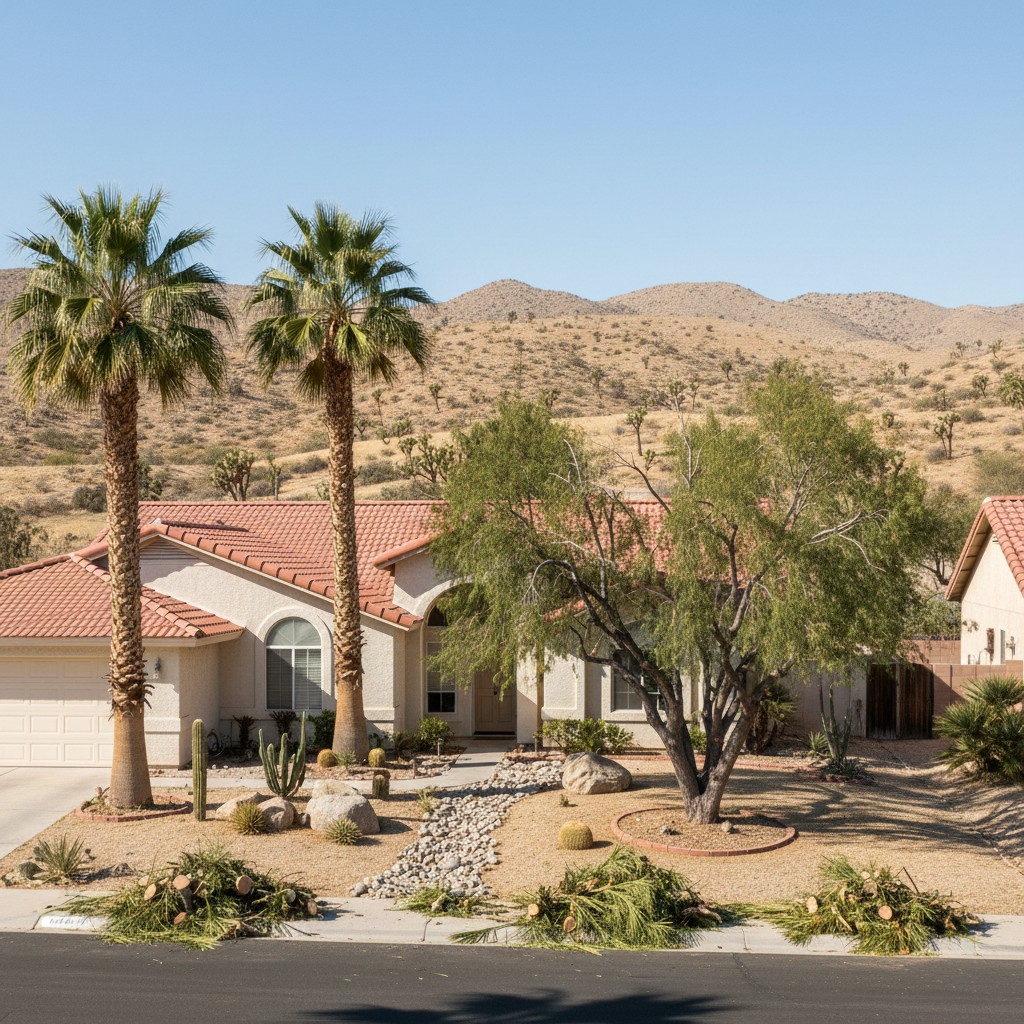
When's the Best Time to Prune Trees in Desert Hot Springs?
You’ve got trees, and you know they need trimming. But when’s the right time here in Desert Hot Springs? It’s not a one-size-fits-all answer, especially with our desert climate. Generally, the dormant season – late fall to early spring – is your best bet for most deciduous trees. That's when they've dropped their leaves, and it's easier to see the branch structure. Plus, they're not actively growing, so pruning causes less stress.
For evergreens, it's a bit different. You can often prune them lightly any time of year, but avoiding the hottest summer months is smart. Heavy pruning on evergreens is usually best done in late winter or early spring before new growth really kicks in. Think about it like this: you wouldn't want to get a major haircut right before a big event, right? Trees are kind of the same; you want to give them time to recover before they're putting all their energy into new leaves or flowers.
How Our Desert Weather Affects Pruning
Our weather here in Desert Hot Springs is a huge factor in tree care. Those scorching summer days? They're not ideal for major pruning. Cutting branches in extreme heat can stress the tree, making it more susceptible to pests and diseases. The open wounds can dry out too quickly, and the tree has to work harder to heal when it's already fighting off intense sun and heat.
Wind is another big one. We get some serious gusts, especially during those Santa Ana events. Trying to prune a large tree on a super windy day is just plain dangerous, both for the crew and for your property. Loose branches can become projectiles, and it’s tough to make precise cuts. That’s why we often have to reschedule if the winds are really whipping. It’s not us being difficult; it’s us being safe and making sure the job gets done right without damaging anything.
Rain? Not usually a problem here, but if we do get a rare downpour, wet conditions can make things slippery and unsafe. Plus, some tree diseases spread more easily when it’s wet, so pruning during rain can open the door to those issues. We always check the forecast before we head out, because the last thing anyone wants is a botched job or an accident because of the weather.
Protecting Your Tree Investment Year-Round
Pruning is a big part of tree health, but it's not the only thing. Think of it as one piece of the puzzle. Here's what else you should be doing to protect your trees, especially with our unique conditions:
- Smart Watering: This is huge in the desert. Deep, infrequent watering is better than shallow, frequent watering. You want to encourage roots to grow down, not just stay at the surface. For mature trees, a good soak once every few weeks is often better than a little bit every day. Don't forget that many of our native trees, like our beloved Palo Verde, are pretty drought-tolerant once established, but even they appreciate a deep drink now and then.
- Mulch, Mulch, Mulch: A good layer of organic mulch around the base of your trees does wonders. It helps retain soil moisture, keeps soil temperatures more consistent (which is a big deal when the ground heats up to 100+ degrees), and suppresses weeds. Just make sure to keep it a few inches away from the tree trunk itself to prevent rot.
- Pest and Disease Monitoring: Walk around your yard regularly and really look at your trees. Are there any strange spots on the leaves? Is bark peeling unusually? Are there any weird growths? Catching problems early can save your tree. If you see something, call us at Desert Hot Springs Tree Service. We can usually identify the issue and recommend a course of action.
- Professional Check-ups: Just like you go to the doctor, your trees benefit from regular professional eyes on them. An arborist can spot subtle signs of stress or disease that you might miss. They can also advise on structural issues, like weak limbs that might be a hazard during our strong winds, especially for those older, larger trees you see in areas like the Panorama Park neighborhood.
- Proper Fertilization (If Needed): Not all trees need fertilizer, and too much can actually harm them. If your tree isn't looking its best, a soil test can tell you what nutrients are missing. Then, you can fertilize specifically for what your tree needs, rather than just guessing.
Taking care of your trees is an ongoing commitment, but it's worth it. Healthy trees add value to your property, provide shade, and just make our desert environment more beautiful. If you've got questions or need a hand with your trees, you know who to call.